MiraChlor-W™ Rx · for licensed professionals FDA 510(k) CLEARED · RX ONLY
MiraChlor™ by LETUS
Rx · for clinicians

Prepare the wound bed. Spare the tissue.

MiraChlor-W™ Rx is single-species, pharmaceutical-grade hypochlorous acid for professional wound management — debridement irrigation, physical disruption of biofilm, and removal of microorganisms, with a biocompatibility profile that respects healing tissue.

Single-species HOCl USPTO 11,225,723 B2 ISO 10993 panel 510(k) K252023
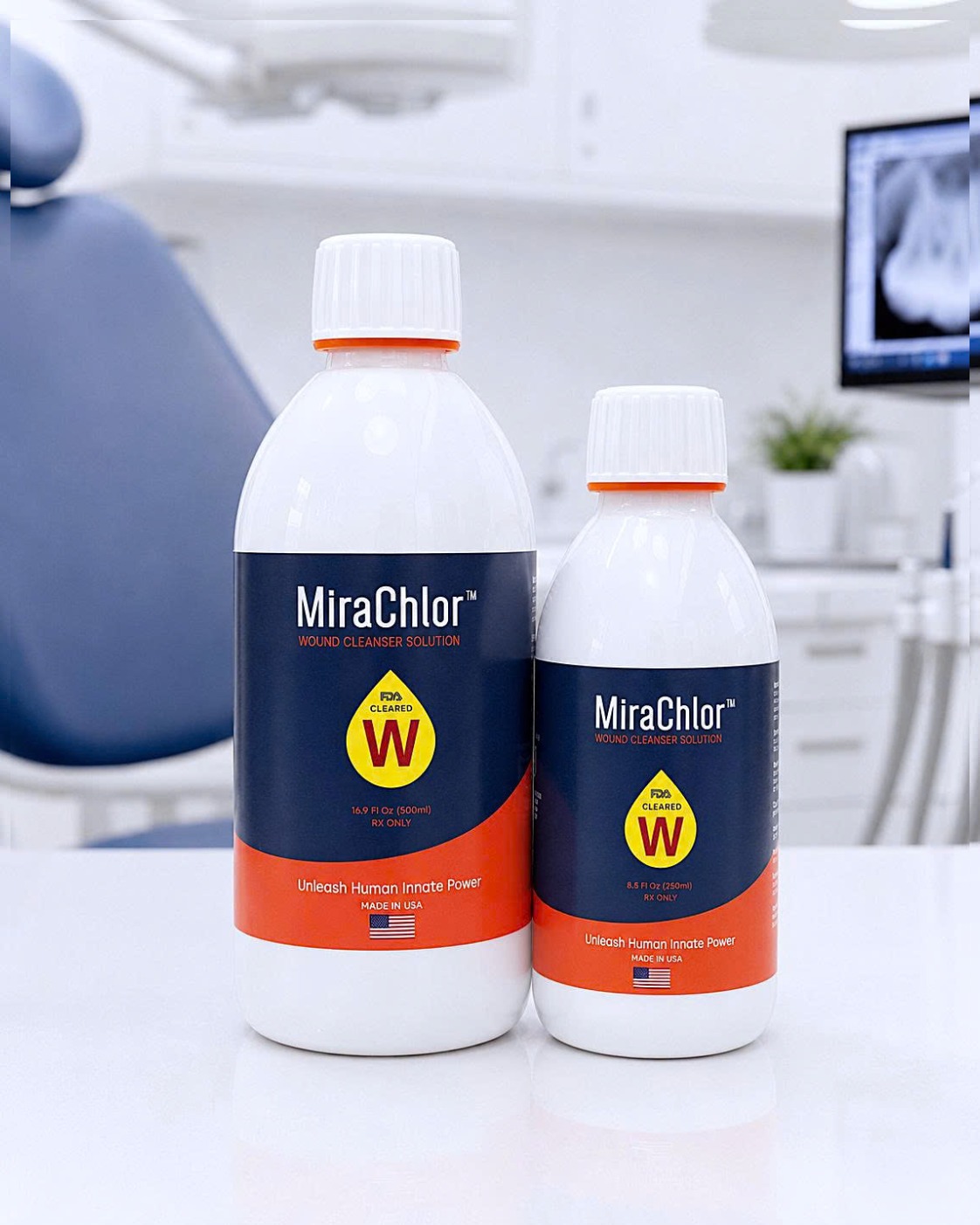
MiraChlor Rx bottles — 500 ml and 250 ml on a clinic countertop
Intended use

Three jobs at the wound bed

i.

Debridement irrigation

Used during cleansing and irrigation to loosen and carry away slough, necrotic debris, and exudate from the wound bed.

ii.

Physical disruption of biofilm

Helps break down and remove the biofilm matrix that shields bacteria and stalls chronic and infected wounds.

iii.

Removal of microorganisms

Mechanically reduces the bioburden at the surface, supporting a clean bed for granulation and closure.

iv.

Tissue-sparing chemistry

At a skin-friendly pH, the working solution is non-cytotoxic at use dilution — so debridement doesn't come at the cost of viable tissue.

Indicated wound types

Acute & chronic, across the spectrum

For use by healthcare professionals in the management — via debridement — of:

  • Stage I–IV pressure ulcers
  • Partial- and full-thickness wounds
  • Diabetic foot ulcers
  • Post-surgical wounds
  • First- and second-degree burns
  • Grafted and donor sites
The differentiator

Purity you can specify

MiraChlor-W's HOCl is produced by LETUS's patented electrolytic process to a single dominant species — without the residual hypochlorite, chlorate, or chloramines that ride along in many solutions.

US 11,225,723 B2

Patented saltwater electrolysis buffered with sodium bicarbonate — the engine behind consistent, single-species purity.

Compared to mixed-species solutions, single-species HOCl means less off-target cytotoxic load and a more stable, predictable active at the point of care.
Directions for use

At the point of care

01

Apply

Apply MiraChlor-W to the wound and surrounding area to cover it.

02

Cleanse

Use gauze soaked in MiraChlor-W to cleanse the wound during debridement and dressing changes.

03

Rinse

Follow with a saline rinse so that no residue of MiraChlor-W remains.

04

Reassess

Repeat at each dressing change as part of the overall wound-management plan.

Rx only · external use only · not for injection. There may be temporary stinging when first applied to broken skin. Do not store inflexible tubing for more than 2 hours; avoid prolonged metal contact. Use at room temperature, from the original packaging. Keep out of reach of children.
Biocompatibility

A full ISO 10993 panel, favorable

ISO 10993-5

Cytotoxicity

✓ Non-cytotoxic

Viability above the 70% threshold at working dilutions.

ISO 10993-11

Systemic toxicity

✓ No toxicity

No mortality, clinical signs, or pathology (IV route).

ISO 10993-23

Irritation

✓ Non-irritant

No erythema or oedema on intracutaneous testing.

ISO 10993-10

Sensitization

✓ Non-sensitizing

No Type IV hypersensitivity (GPMT).

ISO 10993-11

Pyrogenicity

✓ Non-pyrogenic

Temperature rise below 0.5 °C.

510(k) · K252023

FDA cleared

Substantially equivalent for labeled indications.

GLP studies to ISO 10993 / US FDA guidelines, 2024. Full reports available to clinical partners on request.

Real-world clinical use · Vietnam

Complex wounds, documented

Cases from hospital wound-care teams using MiraChlor solution as part of debridement and dressing protocols.

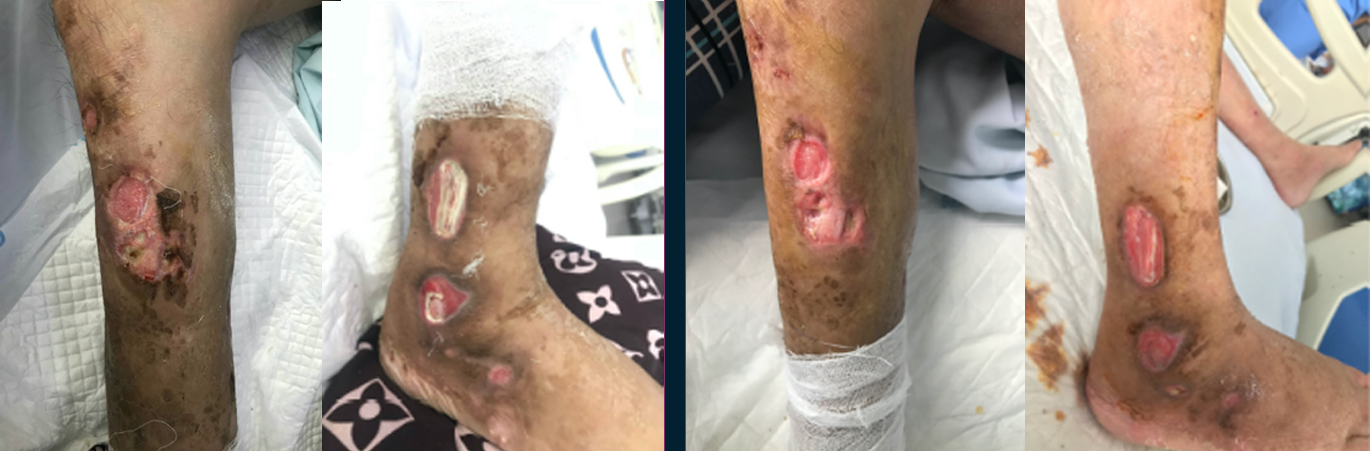
Lower-leg ulcers before treatment and after 15 days
Day 1 — on admissionDay 15 — granulation established
Chronic ulcersICU

Multiple lower-leg ulcers, critically ill patient

Local infection control and moisture balance with ~1,000 ml MiraChlor (100 ppm). Granulation assessed as strong — no skin graft required.

ICU · Agriculture General Hospital
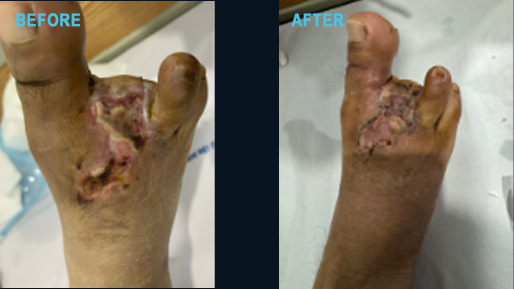
Diabetic foot wound progressing through post-graft days
Day 1Day 10 post-graft
Diabetic foot

Type 2 diabetic foot, post-amputation

Infected, exuding bed dressed daily; cleared and accepted a skin graft that progressed.

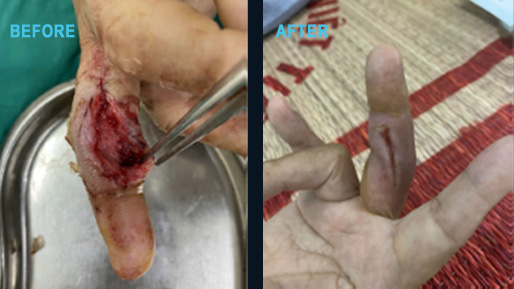
Work-injury finger abscess day one to healed at day 23
Day 1Day 23 — closed
Abscess

Work-injury finger abscess

Debridement plus daily MiraChlor irrigation and antibiotics; closed by day 23.

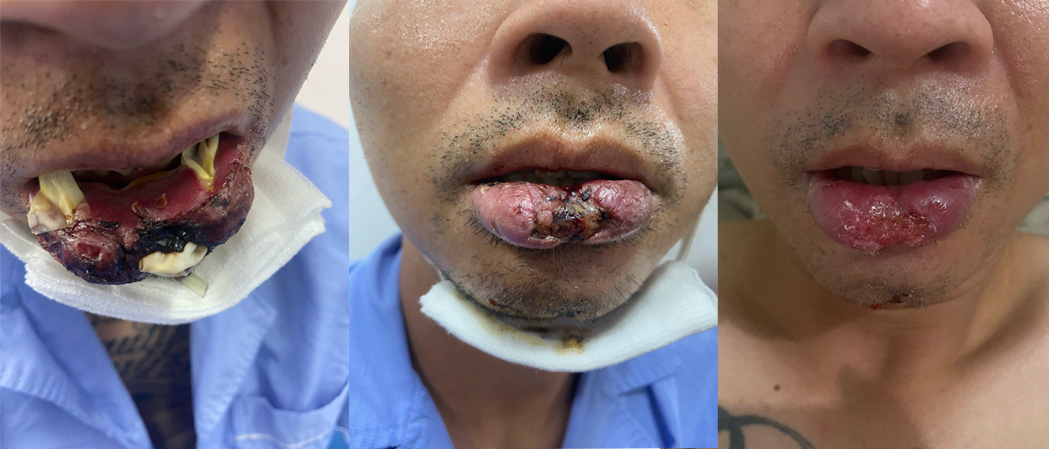
Lip necrosis from abscess healing from day 1 to day 12
Day 1Day 6Day 12
Lip abscess

Lip necrosis

Lip necrosis caused by an abscess. Lesion rinsed with MiraChlor daily alongside antibiotics; inflammation settled with steady progress to healing.

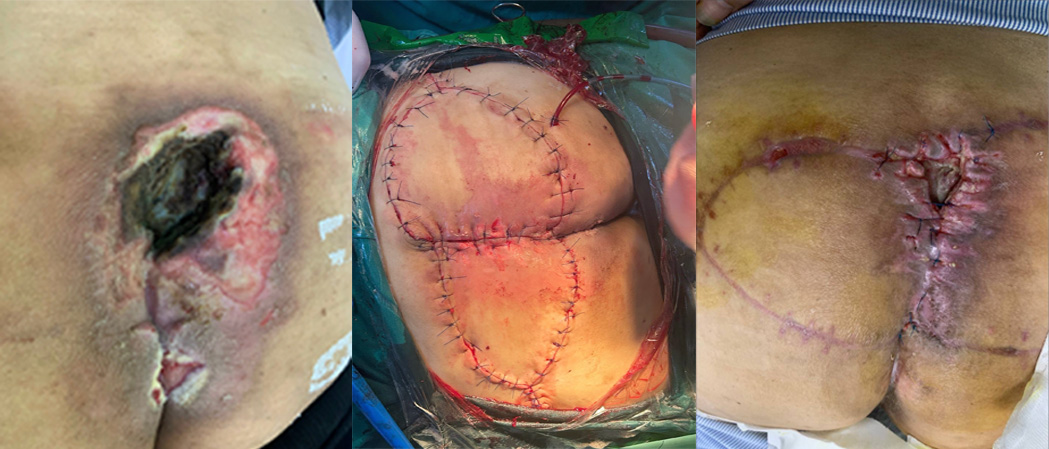
Sacral pressure-ulcer flap reconstruction healing over time
Post-flap, day 21Day 45 → discharge
Stage IV pressure ulcerFlap / NPWT

Sacral pressure ulcer, flap reconstruction

Paraplegic patient with type 2 diabetes. Daily debridement and MiraChlor soak built a granulating bed; flap placed and supported with negative-pressure therapy and MiraChlor irrigation through to discharge.

Endocrine & Cardiology · Agriculture General Hospital

Photographs are from clinician-documented real-world use in Vietnam, used as part of standard debridement, dressing, and medical therapy — not controlled clinical trials. Individual results vary. MiraChlor-W is a wound cleanser indicated for use within an overall wound-management plan.

At a glance

Product & ordering

Product
MiraChlor-W™ Rx Wound Cleanser Solution (Rx only)
Ingredients
Water, sodium chloride, and 400ppm hypochlorous acid (preservative)
Sizes
8.5 fl oz (250 ml) · 16.9 fl oz (500 ml)
Clearance
FDA 510(k) K252023 · product code FRO
Process patent
USPTO 11,225,723 B2 (LETUS electrolytic method)
Storage
5–25 °C (41–77 °F), away from sunlight and heat. Do not freeze.
Origin
Made in USA · LETUS Corporation, Portland, OR
Accounts
Bulk orders & NET-30 available for licensed facilities
For licensed professionals

Bring single-species purity to your wound-care protocol.

Request a sample, clinical references, or a wholesale account for your practice or facility.

    Prefer to talk? Call 877·775·3887 or email [email protected].