MiraChlor Oral Rinse: Daily & Post-Surgical Antimicrobial Solution
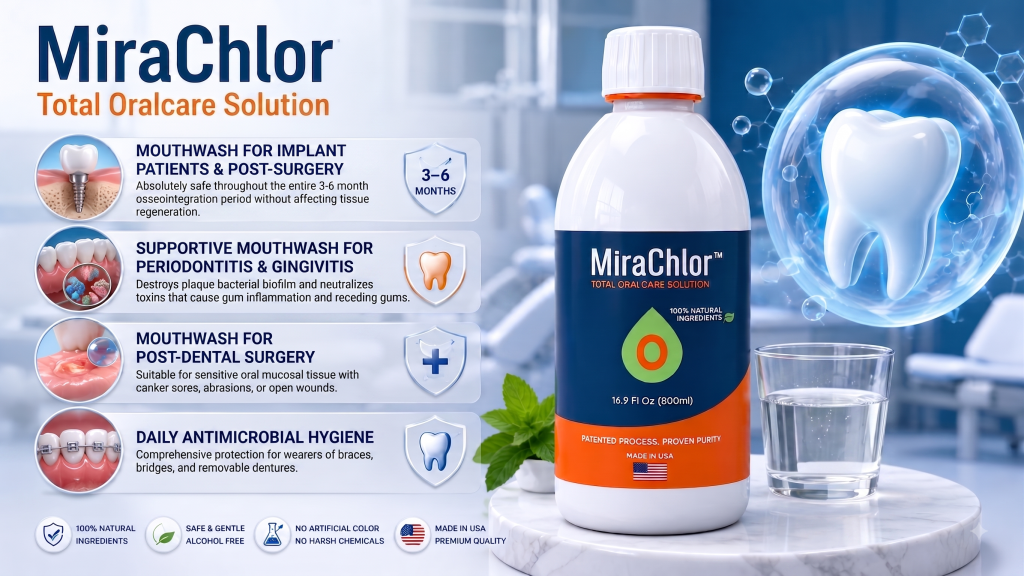
In modern dentistry, MiraChlor™ Oral Rinse (containing 100 ppm HOCl) is a breakthrough alcohol-free antimicrobial mouthwash designed to control pathogens and support post-tooth extraction care and implant surgery recovery. Unlike traditional formulations containing Chlorhexidine (CHX) that cause burning sensations or tooth staining, it offers a gentle, highly effective solution that is safe for compromised oral tissue.
1. What is MiraChlor™ Oral Rinse?
MiraChlor Oral Rinse is a pharmaceutical-grade HOCl dental rinse formulated with 100% natural Hypochlorous Acid. HOCl is the exact endogenous molecule produced by human neutrophils (white blood cells) to destroy pathogens and protect the body from infections.
Pure & Minimalist Formula — Only 3 Essential Ingredients:
– Water (H₂O)
– Salt (NaCl)
– Hypochlorous Acid (HOCl) at the 100 ppm therapeutic window
Manufactured in an FDA-registered, cGMP-compliant facility in the USA, MiraChlor utilizes LETUS’s patented electrolytic technology. This process yields single-species, highly pure HOCl with zero residual sodium hypochlorite, hypochlorite ions, or free chlorine contaminants.
2. Over 100 Years of Medical History of Hypochlorous Acid (HOCl)
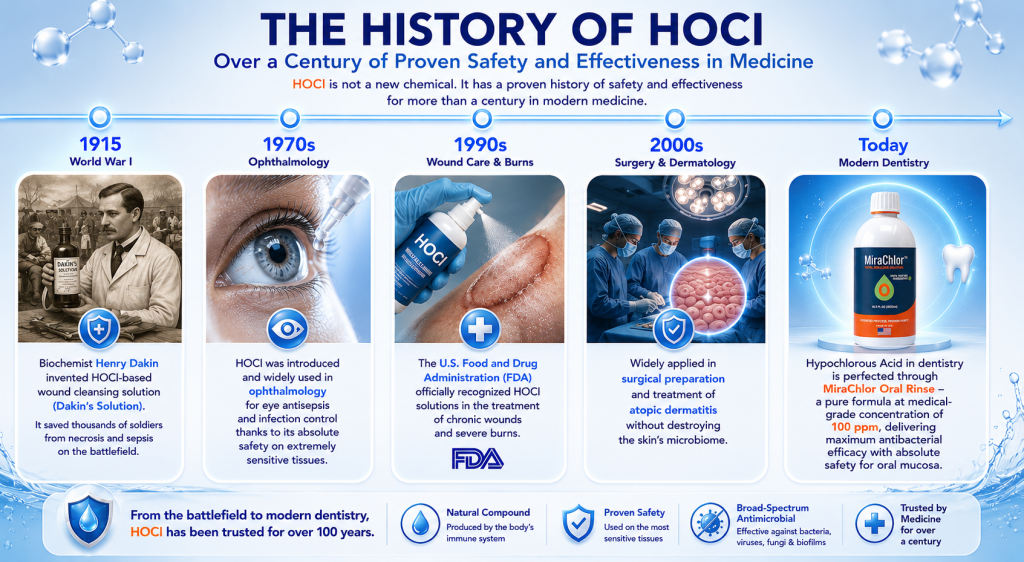
HOCl is not a novel synthetic compound; it boasts more than a century of proven efficacy and safety in modern medicine:
- 1915 (World War I): Biochemist Henry Dakin developed an HOCl-based wound irrigation solution (Dakin’s Solution), saving thousands of soldiers from gangrene and sepsis on the battlefield.
- 1970s (Ophthalmology): HOCl was adopted in eye surgery and infection control due to its exceptional safety profile on delicate ocular tissues.
- 1990s (Wound & Burn Care): The US FDA cleared HOCl-based solutions for chronic wound and burn management.
- 2000s (Surgery & Dermatology): Broadly applied for surgical site preparation and managing atopic dermatitis without disrupting the skin microbiome.
- Present (Modern Dentistry): Hypochlorous acid in dentistry reaches its pinnacle with MiraChlor Oral Rinse—pH-buffered and concentrated at the 100 ppm therapeutic window for maximum oral pathogen control.
3. The Science: How HOCl Works in the Oral Cavity
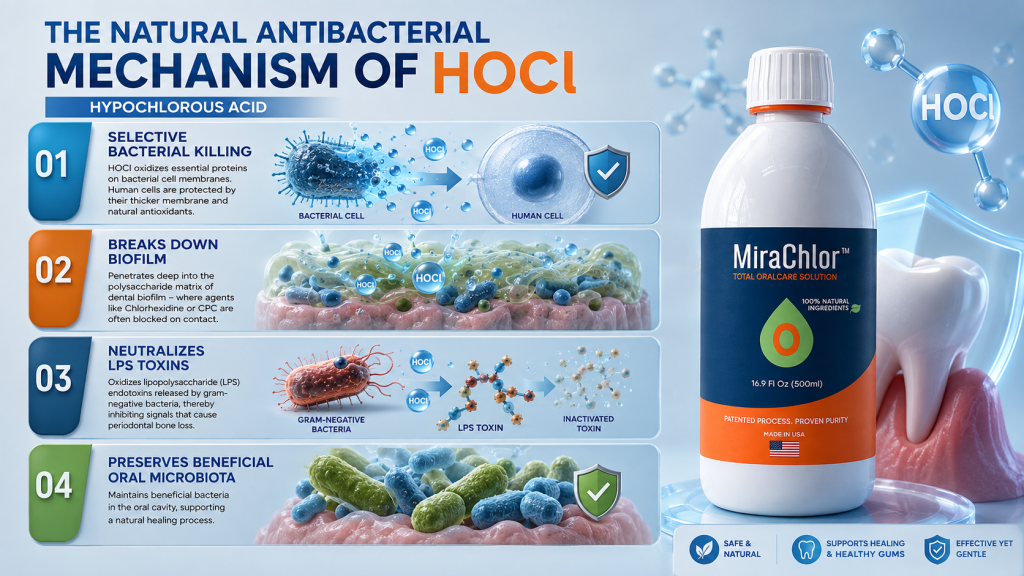
Unlike harsh chemical agents, HOCl for oral biofilm disruption functions in complete harmony with natural human biology:
- Selective Oxidative Kill: HOCl oxidizes essential proteins in microbial cell walls. Human eukaryotic cells—protected by thicker membranes and cellular antioxidants—remain unharmed.
- Biofilm Disruption: Penetrates deep into the extracellular polysaccharide scaffold of plaque biofilms where traditional rinses plateau upon contact.
- LPS Neutralization: Oxidizes endotoxins (Lipopolysaccharides) released by gram-negative bacteria, blocking signals that trigger alveolar bone loss.
- Preserves Commensal Microbiome: Spares beneficial oral microflora necessary for proper biological healing.
4. Why Choose MiraChlor Over Chlorhexidine (CHX)?
When evaluating HOCl vs Chlorhexidine mouthwash, CHX’s severe side effects often restrict its prolonged use. MiraChlor serves as the ideal Chlorhexidine alternative in dentistry:
| Feature | Chlorhexidine (CHX) | MiraChlor Oral Rinse (100 ppm HOCl) |
| Extrinsic Staining | Causes dark brown staining on enamel & crowns | Non-staining antimicrobial mouthwash |
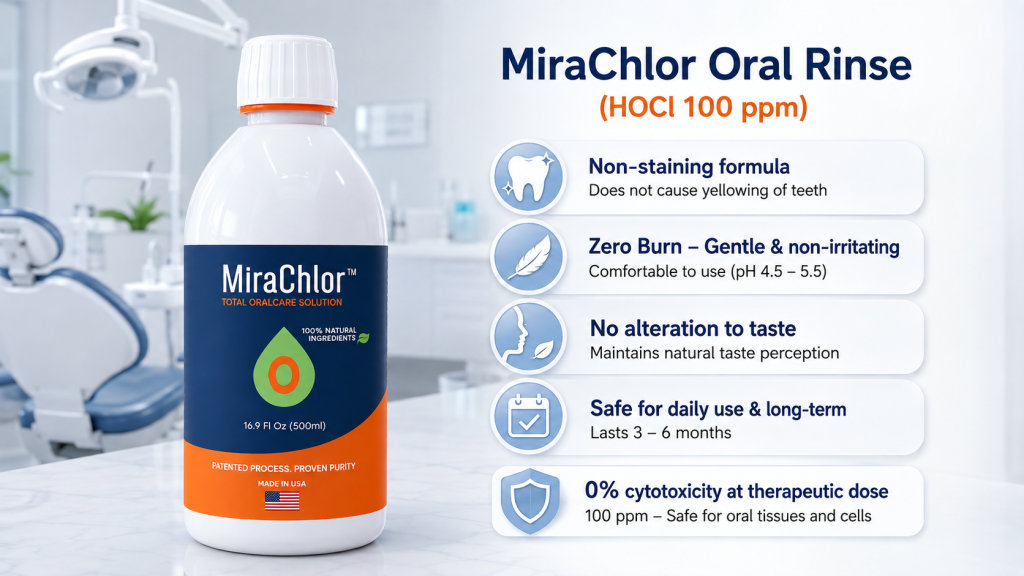
| Rinsing Experience | Burning & stinging on raw surgical tissue | Zero Burn – Soothing & gentle (pH 4.5–5.5) |
| Taste Alteration | Causes dysgeusia & metallic aftertaste | Mouthwash that doesn’t alter taste |
| Usage Window | Capped at 14 days maximum | Safe for long-term daily use (3–6 months) |
| Cytotoxicity | Inhibits fibroblast migration and growth | 0% cytotoxicity at 100 ppm dose |
5. Key Clinical Indications
MiraChlor Oral Rinse is recommended by dental professionals for versatile clinical and home care uses:
- Mouthwash for dental implants & post-surgery: 100% safe throughout the full 3–6 month osseointegration window without impairing tissue regeneration.
- HOCl rinse for periodontal care: Disruption of pathogenic biofilm and neutralization of LPS endotoxins causing gingival inflammation.
- Oral rinse for post-surgery healing: Gentle soothing action for sensitive mucosal tissues, aphthous ulcers, or fresh surgical sites.
- Daily antimicrobial maintenance: Long-term hygiene protection for patients with crowns, bridges, and orthodontic appliances.
6. Directions for Use
- Dosage: Rinse with 15–20 mL of MiraChlor Oral Rinse (use directly, do not dilute).
- Application: Swish gently around the oral cavity for 30–60 seconds, targeting surgical sites or sensitive gums.
- Frequency: Use 2–3 times daily after brushing, or as instructed by your dental professional.
- Note: Free from ethanol, surfactants, and artificial dyes, making it safe for continuous daily care.
7. Frequently Asked Questions (FAQ)
Does MiraChlor Oral Rinse cause burning or stinging on open mucosal wounds?
Absolutely not. Formulated at a balanced pH of 4.5–5.5 with zero alcohol or artificial dyes, MiraChlor provides a gentle, soothing experience (Zero Burn) without stinging—even on fresh surgical wounds or deep canker sores.
Is MiraChlor safe for pregnant women and children?
Yes. Because the active molecule (HOCl) is completely biocompatible with the body’s natural immune system and exhibits 0% cytotoxicity, MiraChlor is exceptionally safe for pregnant women, nursing mothers, and children (under adult supervision).
Can I use MiraChlor as a long-term daily mouthwash?
Absolutely. Unlike Chlorhexidine, which is capped at a 14-day limit, MiraChlor is completely safe for daily maintenance over extended periods (3–6 months or longer) without causing tooth staining or disrupting the oral microbiome balance.
MiraChlor™ Oral Rinse bridges a century of validated HOCl science with state-of-the-art US manufacturing technology. Delivering potent efficacy without burning or staining, it is the premier choice for daily oral hygiene and post-surgical recovery.
“These claims has not been evaluated by the Food and Drug Administration. This product is not intended to diagnose, treat, cure, or prevent any disease.”